
Tuscan Soup and Basic Broth

Today I’m making Tuscan soup. My sister will be consuming this, so the base broth is going to be vegetarian. My preference - for all soups, is chicken broth, but she has been vegetarian for a decade and would detect if I snuck it in.
Tuscan soup is a very loose term in my experience. It could refer to the many stale bread soups, minestrone (tomato based, sometimes including small dried pasta shapes), ribollita from Florence, farinata in Lucca (incorporating polenta) - the list is endless.
Last February, a friend and I attended a cheesemaking course on the road towards the Apennine mountain range, North of Lucca. The workshop was based at a beautiful agriturismo on wooded, terraced land dotted with the traditional stone houses with roofs of grey slate. There was a cosy restaurant on site with a big open fire, and the primo on the lunch menu that day was Zuppa Toscana con erbe selvatiche, ‘Tuscan’ wild herb soup. The soup was thick with greenery, unidentifiable wilted leaves with traces of citrus and spice. It was delicious. To replicate this exactly, with that selection of foraged herbs, would be near impossible. An inspiring once in a lifetime soup.
Usually, Tuscan soup refers to an unblended or ‘chunky soup’, as my Mum would say, comprised of vegetables, beans or stale bread (or both), and broth. The base is always soffritto (onion, celery, carrot), there has to be cavolo nero (black kale), local beans (usually cannellini, but in Lucca, possibly the Bean Capital of Italy, there are so many varieties with different depths of flavour the possibilities are multiple), and then a vegetable or meat broth. Adding potato is very common, but you could freestyle with any starchy root vegetable (that starch is going to help thicken the liquid). A grain is usually welcome, such as spelt or barley (but these add gluten). Crushed, peeled or chopped tomato could be added with a little help from tomato concentrate. Topping the soup with (herby) croutons and freshly microplaned parmesan are essential finishing touches. And a generous glug of high quality extra virgin olive oil.
Today, instead of cannellini beans I’m using a variety of chickpea from Lucca, from Azienda Agricola Guido Favilla to be exact. Guido is a biodynamic farmer from Lucca with a beautiful, varied selection of beans, lentils, polenta and grains. Since returning to Dublin a few weeks ago, I have exhausted my bean supply. The only cannellini beans I have found here are the product of conventional farming and hail from Egypt. I did try these on a friend three weeks ago and I wasn’t happy with the colour (grey?!), texture (mealy) and flavour (non-existent).
Recently, a chef friend and I discussed Tuscan soup over lunch. We were sitting in my favourite restaurant in Lucca, Buatino, sharing a plate of pasta and a bowl of farinata - the aforementioned thick Lucchese take on Tuscan soup which uses polenta. Buatino serves the best farinata I have tried. A close second is the farinata we used to make at the restaurant last summer, which was put in the fridge overnight, cut into small rectangles the following day and deep-fried. My friend and I have made Tuscan soup together many, many times, both at home and for private cooking events. We noted how we had never made the same soup twice, something was always tweaked, but every time it was exceptionally good. We are good at soup. We decided that what makes our soup so good is: high quality ingredients (obviously), cooking all the components separately before joining them together, and a very flavourful broth base.
Make the broth first. Usually, I am a less-is-more person when it comes to ingredients, but I take the opposite approach with broth - more! MORE! More bay leaves! More alliums! More celery! More peppercorns! More ginger! - and yes, I almost always have ginger floating around in a broth. While broth is great for leftover peel, skin and discarded bits, they have to be still somewhat fresh when they get thrown into the water. If you cook slightly moldy leek, you will taste slightly moldy leek out the other side. I like to use something starchy for a bit of thickening, or the heel of finished hard, aged cheese, like parmesan or pecorino. And I’m a big fan of chucking in as many non-bitter fresh herbs as possible: rosemary, bay, thyme, oregano, marjoram. Depending on what you’re using a broth for, sometimes a bit of spice from cloves or fennel seed is a lovely addition. Or chilies for heat.
For a soup with a vegetable broth base, the cooking water from the beans is essential for flavour and texture. Always keep bean cooking water!
I simmer (boiling reduces flavour and nutrition content) a vegetable broth for at least an hour. Chicken broth for a minimum of 1.5 hours, and at least 2 hours for red meat or bone. For meat broths, added flavour comes from roasting the carcass, bones, head, feet etc., beforehand. Never salt a broth. Once you salt a broth you cannot control the salt content of whatever your finished dish will be.
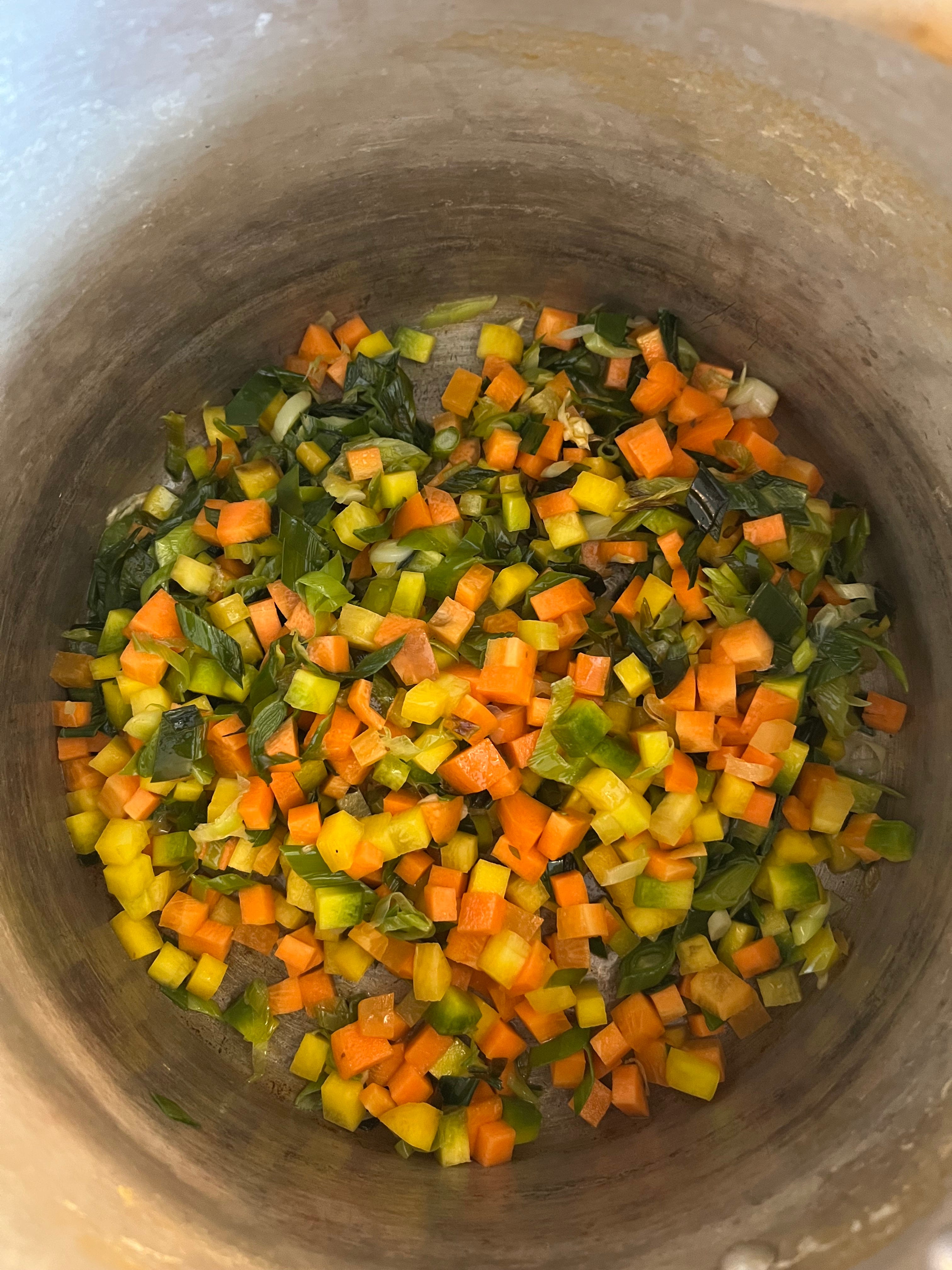
So, a Tuscan soup. The night before, soak the beans of choice. The day of the soup, cook the broth in one pot, and the beans in another (add some bay, maybe some peppercorns, or instead of water, a tannic breakfast tea, chef’s choice). When the broth has been simmering for an hour, and the beans are still too al-dente, begin to dice the vegetables for the soffritto (onion, celery, garlic), the root vegetable, and de-stem the kale (or finely slice the cabbage). For unblended soup, I prefer vegetables diced small and neat. I like the mouthfeel and find it aesthetically pleasing. Throw all the discards into the simmering broth or save for the next one. If you prepare the vegetables too far in advance they will dry out a little, and the potatoes will oxidise.
I cook the soffritto in a tall pot, add a bit of salt and then cover the vegetables with baking paper so that they sweat. If you simply cover with a lid there is too much space between the vegetables and the lid for them to properly sweat out their water content. Once the colour has become more saturated and the edges softer in appearance, I add the root vegetable, tomato concentrate and a teaspoon of Dijon mustard, more salt and pepper. Potato sticks easily, so a ladle of broth could be needed. Stir it well, and then cover with the baking paper to let it sweat for a little longer. After a few minutes, if using peeled tomatoes from a tin, now is the moment. Cover the mixture with the broth that has been gently simmering away in a separate pot. Here, throw in any woody herbs at hand. Allow to simmer uncovered until the vegetables have softened but still have a bite to them. No one wants to eat melted or mushy vegetables in a soup. Add the kale/cabbage.
When the kale is wilting a little, but still vibrant green, add the beans and as much bean water as the soup can take without drowning out the vegetables. Simmer until the kale is limp but still green. Taste for salt, taste for vegetable texture. If there is too much liquid, reduce the heat and simmer off as much as you can without killing the vegetables and dissolving the beans (oh shiiiiiit). Vegetables kept very al-dente will be very forgiving here.
Sometimes, I ladle a quarter or third of the soup into the food processor and blend it before adding it back to the main soup. This gives the soup a lovely, thick, creamy texture. It’s particularly great on colder days.
Plate, crouton, Parmesan, oil. Finito.