
Garmugia
Tuscan Spring soup providing a tenuous Proustian flashback to memories of cooking at Tenuta di Valgiano, a grape harvest and the beginning of life in Lucca

Garmugia season is coming to an end. Garmugia, a traditional seasonal Spring soup from Lucca, is my favourite plate that I learned during my two and a half years working and living in Lucca. It is similar to the Roman dish Vignarola. The ingredient list is a romantic ode to spring, a medley of the last of the early spring vegetables, artichoke and asparagus, and the first of the late spring vegetables, pea and fava bean. The window of opportunity to enjoy this hearty minced veal and vegetable soup is short, and I now look forward to it every year. A perfect lunch choice for a rainy April day in northern Tuscany.
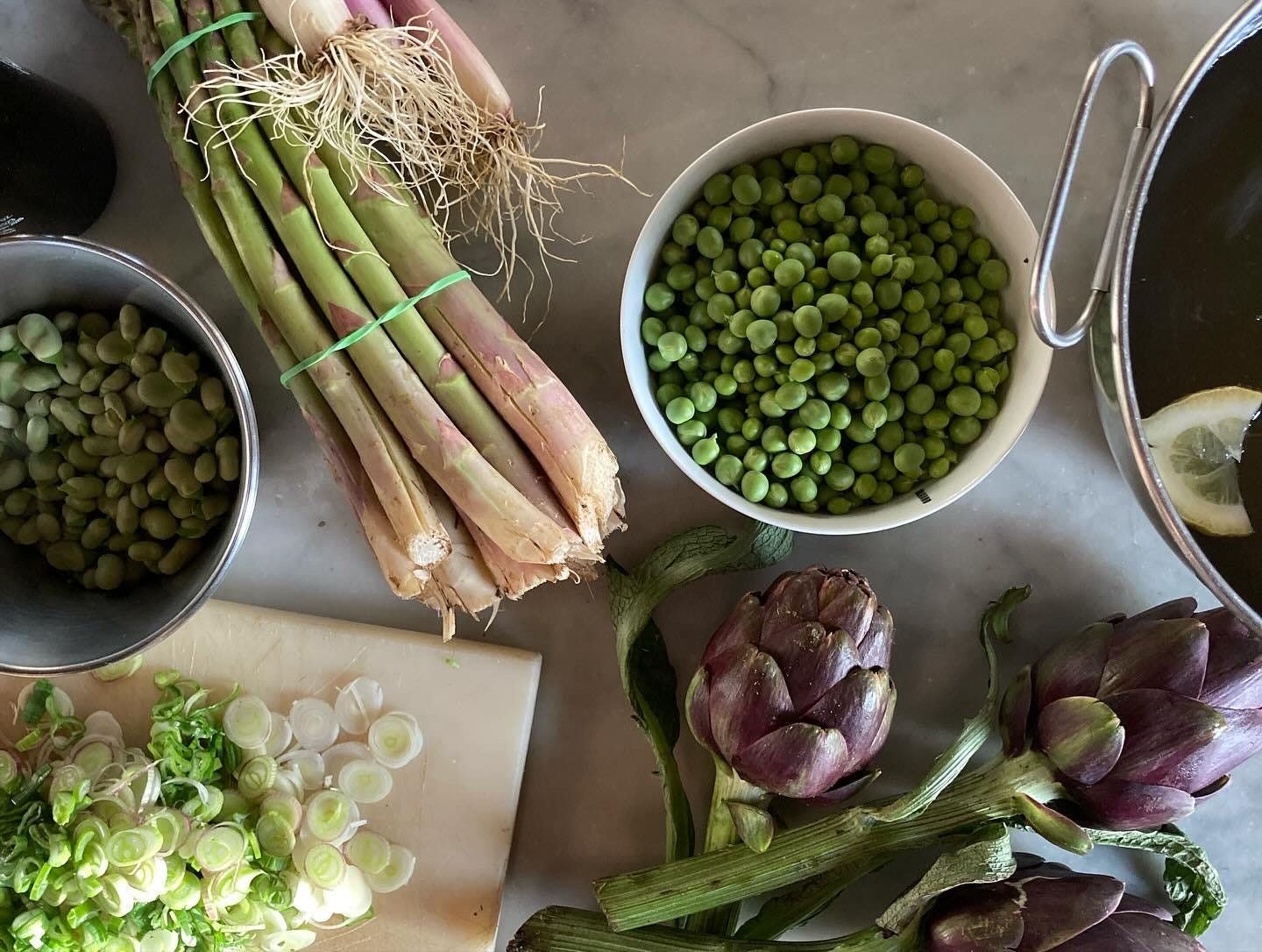
I learned about Garmugia while working as the private chef at Tenuta di Valgiano, a biodynamic winery in the hills North-East of Lucca. I would drive to the Tuesday morning farmer’s market in Ponte a Moriano and buy artichokes and asparagus from Stefano, a local grocer. Then to Federico’s farm nearby in Saltocchio for the peas and beans. At the base of Valgiano’s hill is an excellent butcher shop, Menesini, where I would almost exclusively procure the meats for the Villa during my time there. When private cheffing, I enjoy the shopping as much as the cooking, bouncing around the valley in the little Panda visiting farms and markets, trying out different roadside coffee shops each time, sampling different versions of the local salty breakfast pastry, valdostana (a thin puff pastry pie filled with a layer of tomato paste, cooked ham, béchamel or mozzarella), or if in a sweet mood, budino di riso (a shortcrust pastry encased rice pudding).
I first came to Tenuta di Valgiano in September 2018, arriving on my road bike laden down with heavy panniers, to work two weeks of the vendemmia, the grape harvest. Tenuta di Valgiano is the most prestigious biodynamic winery in Lucca. Between 2018-2019, after graduating from university, I spent a year wwoofing and cycling in Italy. I ended up at Valgiano because they were the first to respond to my email requesting to join their harvest. Upon returning to Dublin, something about Valgiano and the two winemakers who I had met there, Saverio and Lisandro, remained in my mind. It was here that I first glimpsed a way of living that I had always dreamed of but didn’t think existed. For years I intended to return, but work or university always got in the way.
In August 2023, while working as a cook and living in London, my housemates and I were evicted from our apartment with short notice. The grape harvest would start in a few weeks. Rather than jumping into a new living situation, I emailed Valgiano’s head winemaker, Saverio, asking if he still had space to take me, last minute, for the coming harvest. He responded immediately: “Yes! Come when you want!” He explained that he had left Valgiano and had his own label now, Malgiacca, using rented vineyards and a rented cantina (cellar). He offered to put me in touch with Valgiano, if I would rather, but I responded that I specifically wanted to work with him again. It was decided. I booked a flight.
Two weeks later, the last to leave the London apartment, I was taking out three bags of rubbish to the outdoor bins. As I dumped the third bag, a gust of wind slammed the front door shut and locked me out of the house. I called my friend Phoebe, who had a spare key down at her Mother’s house in Battersea. The last thing I wanted to do in that moment, in the middle of packing, was travel one hour by tube down South, but I had no choice. I arrived to Phoebe’s Mum’s house and we sat in the garden drinking fresh turmeric and ginger tea. I voiced my concerns and worries about this choice to go away for the grape harvest instead of hunting for a new apartment in London. I had a strange feeling which I couldn’t identify. Phoebe reminded me that it was just a holiday, I was overthinking. As evening approached, Phoebe, her Mum and her sister walked me back to the tube through Battersea Park with their dog. At a certain moment, the dog shat. Phoebe picked up the poo, walked over to a bin and let out a gasp of shock. I assumed she had gotten shit on her hand but then she exclaimed “Laura!” and walked towards me with excitement in her eyes. In her hand she held a small silver plaque with the word Lucca engraved into it - not the name Luca with one ‘c’, but the city, the place I was flying to the following day. We all got very excited. The trepidation dissolved and I felt calm with the decision to go.
When I arrived to Lucca train station, another farm worker, Jacopo from Rome, collected me and drove me out to the rented cellar in Gragnano. The car stopped outside the rental house and Saverio walked towards me smiling, arms partially crossed and one hand rubbing an elbow, something he does when he’s thinking. He was thinner than before, and he had a big grey beard now, the same warm eyes. We looked at each other for a moment, smiling, he recognized me and announced: “You returned!” I felt that feeling of returning to a place you call home after a long absence. I knew instantly that I was in the right place, with the right people, at the right time. I slept soundly that night.
I struggle to write about that time. The grape harvest is always magical, but with that one in particular, so much happened in such a short space of time. Everyday felt like a full and satisfying lifetime. I shared a room with a woman who was to become one of my best friends for life. We worked the Lucca fields and cellar during the week, handpicking in the mornings, destemming over chicken-wire and foot-stomping in the afternoons. Long, physical days punctuated by long, boozy lunches overlooking the vineyard. On weekends Saverio would pack the five of us wwoofers into the truck and we would go to the vertiginous slopes of Liguria to pick his partner’s grapes in a rented vineyard north of Sestri Levante. Days of picking, processing, eating Ligurian foccaccia, cecina, freshly caught fish, swimming in the sea, drinking local wines.
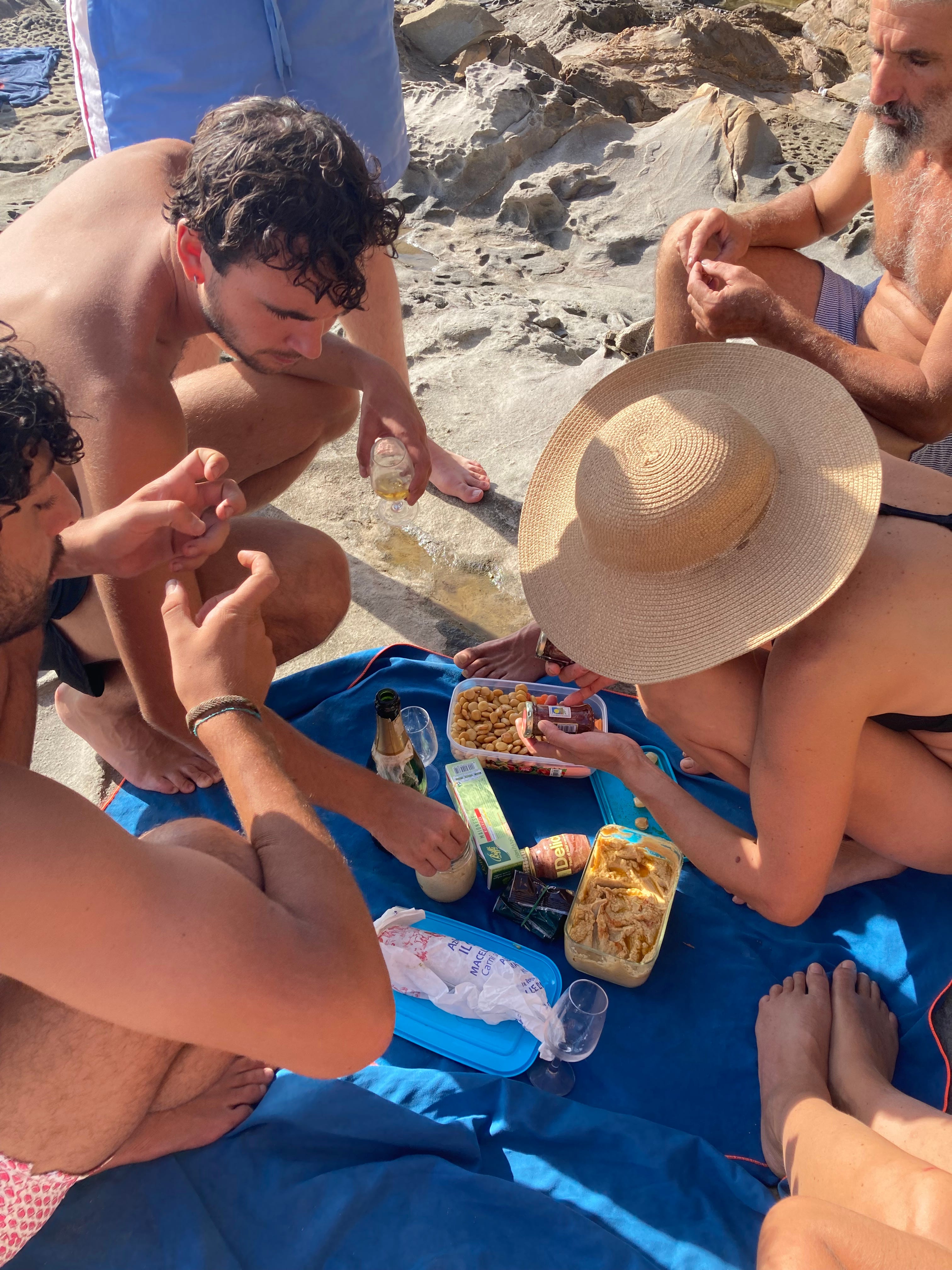
The two weeks I had originally agreed to passed too fast, so I stayed for the full five weeks of harvest. As the work came to a close I felt strongly that I didn’t want to leave this place. Saverio’s business partner, Lisandro, and his girlfriend Martina, were living in a small cottage at Tenuta di Valgiano. Neither Lisandro nor Martina worked there anymore but they were in the process of buying a home nearby. After the harvest, they were travelling to Brazil for a month and needed a house-and-cat sitter. I volunteered and found myself beginning my new life in Lucca back at Tenuta di Valgiano. I flew to London to collect my belongings and returned with the aim of attending language school for a month and then landing a job somehow, somewhere.
One day, after the language school had ended, I descended from a cycle in the hills at dusk. The white Jeep of the owner of the estate pulled up alongside me, I stopped the bike as the window rolled down and Laura and I had a brief conversation:
“Are you still living on my property?”
“Yes.”
“Have you finished that language course?”
“Yes.”
“What are you doing now?”
“I’m looking for work. If you know of anyone who needs someone in the kitchen, the garden, the vineyard, I’m pretty flexible.”
“But what do you do usually?”
“I’m a cook,” I said. She looked away for a moment and then asked, “what are you doing tomorrow?”
“Nothing,” I replied with a shrug and a smile.
“I have five people coming to lunch tomorrow, come to the villa and cook for us.”
“Ok, sure.” I kept my face calm and my voice steady. My heart was thumping. The following day, I cooked. They were pleased. I cooked the day after that as well, and the day after that. I began to work as the private chef for the family and paying guests in the sixteenth-century villa kitchen. I moved into a crumbling outbuilding on the estate which housed the shared kitchen for farm staff, had no heating and neighboured with two boys who I had met during the harvest who would later become close friends.
For paying guests, the food I prepared was mostly Tuscan, while the family enjoyed a sprinkling of Irish-British soups, salads, pies and cakes. Through Laura, and through my friends, I became acquainted with local biodynamic and organic producers of vegetables, beans, polenta, and heritage grains. Work was enjoyable and dynamic. I learned about Lucchese cuisine and wine-pairing. I cooked for winemakers, food writers, actors, Michelin-starred chefs. And at home, with the boys, I learned how to really cook from Stefano, one of the most talented cooks I have ever met (and the bar in Italy is high amongst the civilian population). Stefano and I bonded over food: cooking for friends, fermenting, preserving, experimenting. I would watch, listen, chop, stir, taste, clean. I was his little sous. Food was the foundation of our friendship, and for a year and a half our love language.
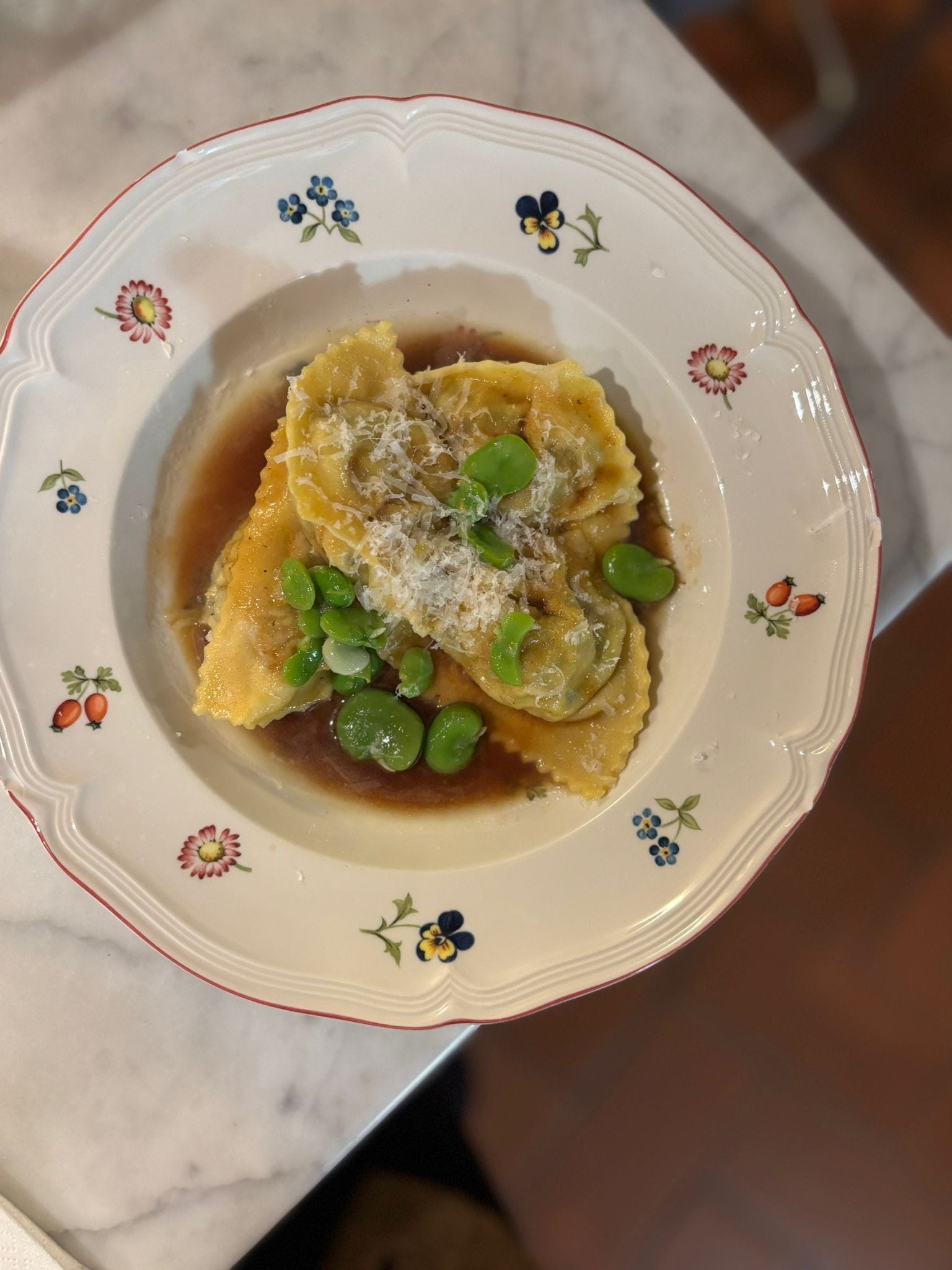
While working with Stefano last Spring (we briefly had a small business together), we developed a Garmugia-inspired filled pasta for a private event. The filling was a combination of finely chopped artichoke, asparagus and pea with ricotta whipped with preserved lemon. The bright green fava beans were scattered on top of the little parcels which we served with a veal fondo and parmiggiano. It was tasty, but the ricotta dominated a little too much, I need to tweak and trial it again.
To return to the traditional Garmugia recipe. The meat broth, prepared before, could be anything: poultry, rabbit, beef, pork, whatever you have - it doesn’t really matter, my preference is chicken because it’s slightly lighter in flavour and combines well with the minced veal during cooking. Each of the vegetables are best prepared separately. The peas and fava beans have to be shelled, briefly blanched in heavily salted water to retain their vibrant green colour, then double-shelled. A somewhat painstaking job, but sitting with no time limit, ideally outside in sunshine with some nice music playing and a companion, makes this task enjoyable. The artichokes, once cleaned, I pan fry with olive oil, herbs and some of the lemon water that I sit them in as I work to prevent them from oxidising. Brown your minced veal, pouring off excess fat and set aside. Fry the pancetta, add back in the mince, top up with heated broth. I add the cleaned asparagus stalks first, cut into small bite-sized pieces, then the artichokes and at the last moment, once the asparagus has softened but retains a bite, add the peas and beans and serve.
Love this post Laura 🙌